Quick Summary
Most dumpster rental problems start before the truck ever arrives. A container that is too small, parked where it blocks the garage, or dropped onto soft ground after a week of rain turns a simple project into a frustrating one. Getting ready takes about an hour. Pick the size on weight as well as volume, choose a flat, firm spot with room for the truck, clear the approach, protect the driveway, check whether you need a permit, and set aside anything that cannot go in. This guide walks through every step in order, with the details that matter here in Acadiana, from summer downpours to subdivision HOA rules.
Pick the Right Size Before You Book
Size is the first decision and the one people most often get wrong. Too small and you are paying for a second haul. Too large and you are paying for air. The goal is the smallest container that holds the whole job, by volume and by weight.
Oge's Waste Services offers five sizes, and each suits a different kind of project.
Think about weight as much as space. Shingles, wet yard waste, tile and plaster are dense, and it is easy to reach the included tonnage while the container still looks half empty. Every size includes a set weight allowance, and anything over that is billed at $100 per ton. If your project is heavy, sizing up is often cheaper than paying overage on a smaller box.
If you are unsure, our size guide walks through common projects room by room, and the pricing guide shows exactly what is included with each container.
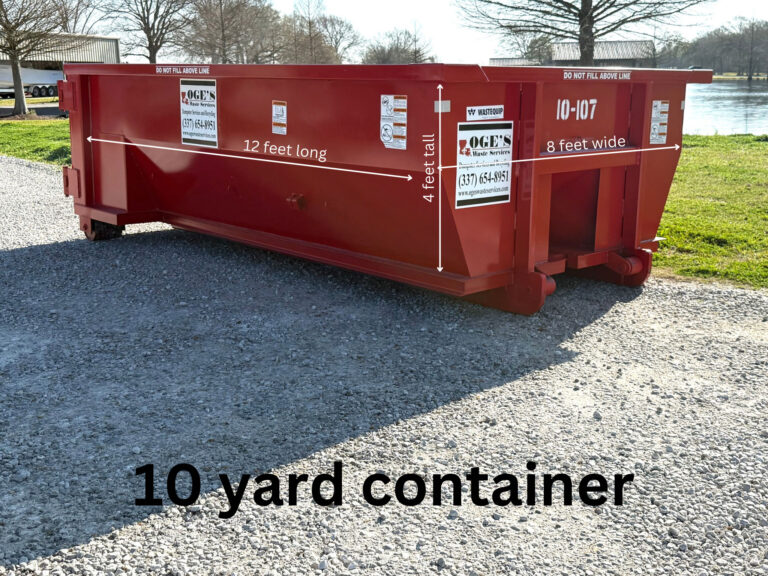
- 10-yard at $375: a single-room cleanout, a small bathroom remodel, a garage purge or a modest yard cleanup
- 15-yard at $400: a kitchen remodel, a larger garage or attic cleanout, or flooring removal across several rooms
- 20-yard at $475 with 2 tons included: a whole-house cleanout for a typical three-bedroom home, a roof tear-off on an average house, or a large renovation
- 30-yard at $600 with 3 tons included: major renovations, new construction cleanup, large estate cleanouts and bulky commercial jobs
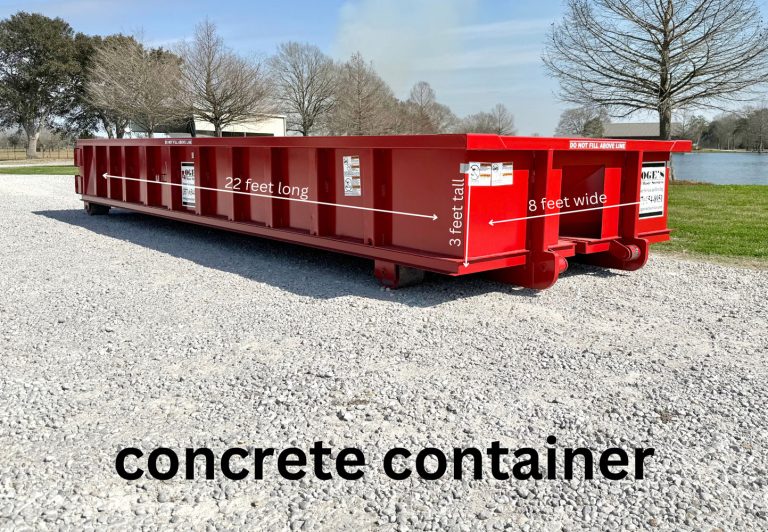
- 7.5-yard concrete dumpster at $300: clean concrete only, such as an old patio, sidewalk or driveway being broken out
Choose Where the Container Will Sit
Decide on the drop spot before you book, not on the morning of delivery. A roll-off is tipped off the back of the truck at an angle and slid into place, so where it lands is where it stays until pickup. Moving a loaded container is not an option.
For most homes in Lafayette, Youngsville and Broussard, the driveway is the best choice. It is firm and level, it keeps the walk from the house short, and it avoids any question of blocking the street. On larger rural lots around Crowley, Rayne or Church Point, a gravel pad or a firm, dry patch near the work area can work just as well.
What Makes a Good Spot
Look for ground that is flat, firm and well drained. Concrete and asphalt are ideal. Compacted gravel is fine. A lawn can work in dry weather, but it will rut under a loaded container, and anything soft or sloped is a problem.
Keep the container close to where the debris is coming from. Every extra foot is another trip with a wheelbarrow. At the same time, leave enough room to walk around it and to swing the rear door fully open, since the door is how you walk heavy items straight in.
Measure Before You Commit
For reference, a 20-yard container is about 22x8x4 feet. The 10-yard and 15-yard share a shorter footprint, and the 30-yard shares the longer one. Measure the driveway or pad rather than guessing, and leave a foot or two of margin on each side.
Clear a Path for the Truck
The container is the easy part. The roll-off truck that carries it is what needs space. As a general rule, the driver needs a straight run of roughly 60 feet, at least 10 to 11 feet of width, and around 25 feet of clearance overhead so the bed can tilt up to set the container down.
Walk the approach from the street to the drop spot a day or two before delivery and look for anything in the way.
Low-hanging oak limbs are the most common problem in older Acadiana neighborhoods. If the truck bed cannot lift without hitting a branch or a line, the driver will have to set the container somewhere else, which may not be where you wanted it.
- Move vehicles, trailers, boats and campers out of the approach and the drop zone
- If the cars live in the garage, park them on the street the night before so they are not boxed in for the whole rental
- Check overhead for power lines, cable drops and tree limbs
- Open and prop any gates, and make sure they are wide enough for the truck
- Clear away toys, bikes, trash carts, planters and hoses
- Note anything the driver should avoid, such as a septic tank, sprinkler heads or a buried line
Protect Your Driveway
A loaded roll-off puts a lot of weight on a few small contact points, the steel rails and wheels on the underside. On a sound concrete driveway that is rarely an issue. On newer concrete, fresh sealcoat, pavers or softer asphalt in summer heat, those contact points can leave scuffs or marks.
The fix is simple. Lay a few sheets of plywood or some 2×8 boards where the rails and wheels will land. Put them down before the truck arrives and point them out to the driver. It is a small, cheap step that removes most of the worry.
If you have a brand-new driveway that has not fully cured, consider placing the container on a gravel area or a firm section of yard instead, or push the delivery back a little.
Check Permits and HOA Rules
If the container sits entirely on your own property, such as in your driveway, a permit is usually not needed. It is when the container goes on the street, a sidewalk or the public right-of-way that permits come into play.
In Lafayette, right-of-way use is handled by Lafayette Consolidated Government, and other cities and parishes across Acadiana have their own rules. If you have no choice but to use the street, call your city or parish public works office before you book to find out what is required and how long approval takes.
Homeowners associations are the other thing to check. Many newer subdivisions in Youngsville, Broussard, Scott and Carencro have rules about how long a container can stay in a driveway, whether it has to be screened or covered, or whether it needs approval first. A quick look at your HOA covenants or an email to the management company avoids a warning letter halfway through your project.
If you are renting for a rental home, a commercial property or a jobsite, confirm with the property owner or general contractor where the container is allowed to go.
Plan Around Acadiana Weather
South Louisiana weather is the part generic checklists leave out, and it affects your rental in three ways.
Soft Ground After Rain
A heavy afternoon storm can turn a firm lawn into mud in an hour. If you are planning to put the container on grass or dirt and it has been raining for days, a heavy truck can sink or leave deep ruts. If the ground is soaked, either move the drop spot to a hard surface or give it a day or two to dry out.
Rain Adds Weight
Rain that sits in an open container soaks into drywall, carpet, cardboard, mattresses and yard waste, and water is heavy. Because you pay by the ton once you pass the included weight, a week of rain on an uncovered container can quietly push you into overage. Keep a tarp handy and cover the load at the end of each day, especially when storms are in the forecast.
Storm Season
From June through November, keep an eye on the tropics. Loose, light debris in an open container can blow around in high winds. If a named storm is heading toward Acadiana, secure the load, tarp it down tightly, and text us early if you would like it hauled before the weather arrives. After a storm, cleanup demand rises fast across the region, so booking promptly helps.
Set Aside What Can't Go In
Almost every project turns up a few items that cannot go in a roll-off. They are usually in the garage, the shed or under the kitchen sink. Set up a separate corner for them before you start loading, so they never end up in the container by accident.
This matters because landfills can refuse loads that contain prohibited materials, which means delays and extra cost. The items below are not accepted in Oge's containers.
Empty, dry paint cans are fine. Clean concrete is accepted, but it belongs in the dedicated concrete dumpster because of its weight. For the full list, including what is accepted, see our guide to accepted and prohibited items.
- Liquid waste, including paint that is still wet
- Fuel, flammable items and propane tanks
- Batteries of any size
- Toxic chemicals and hazardous waste
- Tires
- Creosote posts
- Medical and biohazardous waste
- Explosives
Stage Your Project Before Delivery
A container that arrives before you are ready is a container sitting on the rental clock. A little prep means you can start loading the moment it lands.
- Buy contractor-grade bags, work gloves, safety glasses and dust masks
- Have a wheelbarrow or hand truck ready for heavy loads
- Line up helpers for the first day, when most of the heavy lifting happens
- Break down furniture, cabinets and shelving where you can, since flat pieces pack far better than whole ones
- Flatten cardboard boxes rather than nesting them
- Cut long boards, fencing and carpet into manageable lengths
- Sort donations and items to sell before you start loading, so nothing useful goes in by mistake
Have a Loading Plan
Load heavy, flat items on the floor first, spread weight evenly along the length, and fill gaps with bagged debris as you go. Never load above the top rail. An overfilled container cannot be safely hauled, and the driver will have to wait while it is leveled off. Our guide on how to load a dumpster covers the full technique.
Know Your Rental Terms Up Front
Knowing the terms before delivery avoids surprises on the invoice. Oge's posts its pricing online, and every size includes a starting price, a flat delivery charge and a set weight allowance.
For longer jobs, let us know up front if you expect to fill more than one container, so we can plan around your schedule. Contractors pouring new slabs can also pair a roll-off with our concrete washout services to keep the jobsite clean.
If this is your first time renting, our first-time renter guide covers the whole process from booking to pickup.
- Delivery is $75 flat
- Each size includes a set amount of weight, and overage is $100 per ton
- The rental period runs 28 days
- You can order online any time, day or night, through online booking
- Same-day delivery is available, depending on the schedule
Delivery Day Checklist
Run through this the morning your container is scheduled to arrive. Once the truck is on site, drop-off usually takes only a few minutes.
- The drop spot and approach are clear of vehicles and obstacles
- Gates are open and pets are inside
- Plywood or boards are down if you are protecting the driveway
- The drop spot is marked with cones, tape or a board if you have a precise location in mind
- Someone is home, or the driver has clear instructions on where to place it
- You have a tarp ready if rain is in the forecast
When You're Finished
When the container is full or your project is done, just send us a text. There is no need to wait for a fixed pickup date. We will come collect it as soon as we can.
Before pickup, make sure nothing is sticking up above the top rail, the rear door is closed and latched, and the path to the container is still clear for the truck. Take down any boards you put under it once it is gone, and give the area a quick sweep for nails and screws.
If you filled the container but still have work left, tell us when you text, and we can talk through getting another container out to you.
Ready to Book Your Dumpster in Acadiana?
Oge's Waste Services is a family-owned company based in Duson, serving homeowners and contractors across Acadiana, from Lafayette and Youngsville to Breaux Bridge, New Iberia, Opelousas, Abbeville and everywhere in between. Pricing is posted up front, same-day delivery is available, and pickup is as simple as sending a text.
Once you have picked your size and cleared your spot, compare our dumpster rentals and book online in just a few minutes, any time of day.
Key Takeaways
- Pick your size on weight as well as volume. Heavy materials reach the included tonnage before the container looks full.
- Choose a flat, firm, well-drained drop spot close to the work, with room to open the rear door.
- The truck needs roughly 60 feet of straight approach, 10 to 11 feet of width and about 25 feet of overhead clearance.
- Lay plywood or boards under the rails to protect newer or sealed driveways.
- Driveway placement usually needs no permit. Street placement often does, and many subdivisions have HOA rules.
- Avoid soft ground after rain, and tarp the container to keep rainwater from adding weight.
- Keep tires, batteries, fuel, propane, chemicals and wet paint out of the container.
- Know the delivery fee, included weight, overage rate and rental period before delivery.
- Text for pickup when you are finished, and let us know if the job needs another container.
Frequently Asked Questions
How do I prepare for a dumpster delivery?
Choose a flat, firm spot close to your project, clear vehicles and obstacles from the approach, check for low branches and power lines overhead, lay plywood under the rails if you want to protect your driveway, and open any gates. Have a tarp on hand if rain is forecast.
How much space does a roll-off dumpster need?
Plan on roughly 60 feet of straight approach for the truck, 10 to 11 feet of width and around 25 feet of overhead clearance for the truck bed to tilt. The container itself is smaller, but the truck needs the extra room to set it down.
Do I need a permit for a dumpster in my driveway?
Usually not, as long as the container sits entirely on your own property. Placing it on the street or public right-of-way often requires a permit from your city or parish. Many subdivisions also have HOA rules, so check those before you book.
Will a dumpster damage my driveway?
A sound concrete driveway usually handles a roll-off without trouble. Newer concrete, fresh sealcoat, pavers and soft summer asphalt can scuff or mark, so lay plywood or 2×8 boards under the rails and wheels before delivery.
Can a dumpster be placed on grass?
Yes, when the ground is dry and firm. After heavy rain, grass and dirt get soft, and a loaded container or the truck can sink and leave deep ruts. In wet weather, a driveway or gravel pad is the safer choice.
What can't go in a roll-off dumpster?
Tires, batteries, fuel, propane tanks, toxic chemicals, hazardous waste, liquid waste including wet paint, creosote posts, explosives, and medical or biohazardous waste. Empty, dry paint cans are fine, and clean concrete belongs in a dedicated concrete dumpster.
Does rain make a dumpster rental cost more?
It can. Rainwater soaks into drywall, carpet, cardboard and yard waste, and that extra weight counts toward your included tonnage. Covering the container with a tarp at the end of each day helps you avoid overage charges.
How do I schedule pickup?
Just text us when the container is full or your project is done. There is no fixed pickup date to wait for. If you still have work left, mention it in your text and we can plan for another container.