What’s On This Page
- Quick Summary
- What Is Concrete Washout?
- Why Proper Concrete Washout Management Matters
- The Environmental Risks of Uncontained Concrete Waste
- EPA and Louisiana Regulations You Need to Know
- How Professional Concrete Washout Service Works
- DIY Washout Pits vs. Professional Washout Service
- Who Needs Concrete Washout Services?
- What to Look for in a Concrete Washout Provider
- Schedule Your Concrete Washout Service in Acadiana
Quick Summary
Concrete washout is the process of cleaning wet concrete residue from mixer trucks, chutes, pumps, and tools after a pour. The resulting wastewater is highly alkaline (pH 12 or higher) and contains heavy metals and fine particles that are harmful to soil, groundwater, and local waterways.
Federal and state regulations require that all concrete washout waste be captured in a designated containment area — it cannot be dumped on the ground, washed into storm drains, or left uncontained on a job site. Violations can result in significant fines under the Clean Water Act and Louisiana Department of Environmental Quality (LDEQ) enforcement actions.
Professional concrete washout services handle containment, maintenance, and disposal so your crew can focus on construction. OGE’S Waste Services provides concrete washout basins with same-day delivery across Acadiana, complete with EPA compliance documentation and professional disposal at certified facilities.
What Is Concrete Washout?
Every time a concrete truck delivers a load to your job site, the drum, chute, and hopper need to be rinsed before the remaining concrete hardens inside the equipment. The same goes for concrete pumps, wheelbarrows, hand tools, and forms that come into contact with wet concrete during the pour. This cleaning process generates a slurry of water, cement paste, aggregate fines, and chemical additives — collectively known as concrete washout.
On a typical residential foundation pour in Lafayette or Youngsville, a single concrete truck might generate 50 to 100 gallons of washout water per cleaning. On larger commercial projects, where multiple trucks cycle through over the course of a day, the volume adds up fast. A busy pour day on a commercial site in Broussard or New Iberia can easily produce several hundred gallons of concrete wastewater.
Without proper containment, that waste goes somewhere — into the dirt, across a parking lot, down a storm drain, or into a ditch. And that’s where the problems start.
Why Proper Concrete Washout Management Matters
Concrete washout isn’t just a housekeeping issue — it’s a regulatory, environmental, and financial concern that affects every contractor who works with concrete in Louisiana. Getting it wrong can mean fines, project delays, failed inspections, and damage to your professional reputation.
The core issue is that concrete wash water is classified as an industrial pollutant. Its extremely high pH level — typically between 12 and 13 — makes it corrosive enough to kill aquatic life, damage vegetation, and alter soil chemistry. The fine sediment and chemical additives in the slurry compound the problem. When this material enters the stormwater system, it doesn’t stay local. In Acadiana, storm drains feed into the Vermilion River, Bayou Teche, and other waterways that support the region’s ecosystem, agriculture, and fishing industries.
Beyond the environmental impact, uncontained washout creates practical problems on the job site. Dried concrete slurry on pavement or landscaping is difficult and expensive to remove. It can damage property belonging to clients, neighboring businesses, or municipalities — leading to complaints, disputes, and repair costs that come out of your margin.
The Environmental Risks of Uncontained Concrete Waste
Concrete washout waste poses several specific environmental threats that Louisiana regulators take seriously:
Water contamination — The high pH of concrete wastewater is lethal to fish and aquatic invertebrates. Even small volumes entering a waterway can cause localized die-offs and disrupt the food chain. Louisiana’s bayous and rivers are particularly vulnerable because many are shallow, slow-moving systems where pollutants concentrate rather than disperse.
Soil degradation — When concrete wash water soaks into the ground, it raises soil pH and introduces calcium, potassium, and sodium compounds that alter soil structure. Over time, this can make the affected area unable to support vegetation. On construction sites where landscaping or grading will follow the concrete work, contaminated soil can become a costly remediation issue.
Groundwater contamination — In areas with high water tables — common across much of Acadiana — concrete pollutants can reach groundwater relatively quickly. Heavy metals like chromium, which is present in Portland cement, are a particular concern for groundwater quality.
Storm drain blockage — Concrete residue that enters storm drains can harden inside the pipes, reducing capacity and causing localized flooding. Municipalities take this seriously, and contractors who cause storm drain damage can be held liable for repair costs.
EPA and Louisiana Regulations You Need to Know
Concrete washout management is regulated at both the federal and state level, and contractors working in Acadiana need to understand both layers.
The Clean Water Act and NPDES permits — The National Pollutant Discharge Elimination System (NPDES) program, administered under the Clean Water Act, requires construction sites that disturb one acre or more to obtain a general permit for stormwater discharge. That permit includes specific requirements for managing concrete washout. The waste must be collected in a designated, lined containment area, and it cannot be allowed to enter the stormwater system. NPDES compliance isn’t optional — it’s a condition of your permit to operate.
SWPPP requirements — Every construction site that requires an NPDES permit must also have a Stormwater Pollution Prevention Plan (SWPPP). The SWPPP must identify where concrete washout will occur, describe the containment methods being used, and document maintenance and disposal procedures. Inspectors check these plans, and a missing or inadequate washout provision can result in a notice of violation.
Louisiana DEQ enforcement — The Louisiana Department of Environmental Quality enforces state water quality standards that often mirror or exceed federal requirements. LDEQ inspectors are active across Acadiana, and construction site violations related to concrete waste discharge are among the most common enforcement actions. Fines for Clean Water Act violations can reach tens of thousands of dollars per day of violation, and repeat offenders face escalating penalties.
LEED and green building standards — For projects pursuing LEED certification or other green building credentials, proper concrete washout management contributes to construction pollution prevention credits. Professional washout services with full documentation simplify the process of earning these credits.
How Professional Concrete Washout Service Works
When you schedule concrete washout service with OGE’S Waste Services, the process is straightforward and designed to minimize disruption to your project.
Container delivery and placement — We deliver a concrete washout basin to your job site, typically with same-day availability across the Acadiana region. Our team works with your site superintendent or project manager to determine the best placement — ideally close enough to the pour area that concrete trucks can access it easily, but positioned to avoid interference with other site operations. Proper placement matters because drivers are more likely to use the washout consistently when it’s convenient.
On-site containment — Our basins are designed to capture all washout water and solid residue from truck chute cleaning, pump washouts, and tool rinsing. The high-capacity design prevents overflow and spills, even on busy pour days with multiple trucks cycling through. Concrete solids settle to the bottom while water evaporates or is managed through the disposal process.
Maintenance and monitoring — Throughout your project, we maintain the washout container to ensure it stays functional and compliant. This includes monitoring fill levels and scheduling haul-outs before the basin reaches capacity. You don’t need to dedicate your crew to managing the washout — that’s our job.
Disposal and documentation — When the basin needs to be emptied or the project is complete, we haul the collected waste to a certified disposal facility. All disposal is documented, and we provide EPA compliance documentation for your project records. This documentation is essential for SWPPP files, NPDES permit compliance, and any LEED certification submissions.
DIY Washout Pits vs. Professional Washout Service
Some contractors attempt to manage concrete washout on their own by digging a pit on site and lining it with plastic sheeting. While this approach can technically meet minimum containment requirements, it comes with significant drawbacks that often make it more expensive and less reliable than professional service.
Labor costs add up — Digging, lining, maintaining, and eventually closing a washout pit requires crew hours that could be spent on productive construction work. On a two-week foundation project, the labor cost of managing your own washout can easily exceed the cost of a professional service.
Liner failures create liability — Plastic sheeting tears, shifts, and degrades — especially in Louisiana’s heat and humidity. A single liner failure can allow washout waste to contact native soil, creating a contamination event that triggers regulatory consequences. Professional basins are built for durability and designed specifically for this purpose.
Disposal is still your problem — Even if you successfully contain the waste in a DIY pit, you still need to dispose of it properly. You can’t just backfill the pit and walk away — the collected material needs to go to a permitted facility with proper documentation. Many contractors who start with a DIY approach end up calling a professional service for the disposal step anyway.
Inspection risk — Inspectors know the difference between a properly engineered containment system and a hastily dug pit with a tarp. Professional washout basins demonstrate that you’re taking compliance seriously, which sets a positive tone for the entire site inspection.
At $150 per basin with all-inclusive pricing from OGE’S Waste Services, professional concrete washout service is one of the most cost-effective compliance measures available on a construction project.
Who Needs Concrete Washout Services?
If your project involves concrete in any form, you likely need a washout plan. The most common projects that require concrete washout service in Acadiana include:
Residential foundations and slabs — Every new home foundation, garage slab, and driveway pour generates washout waste that needs containment. Residential contractors working in Opelousas, Crowley, Breaux Bridge, and throughout Acadiana should include washout service in their project planning from the start.
Commercial construction — Larger commercial projects in Lafayette Parish and surrounding areas involve significant concrete volumes across foundations, parking structures, sidewalks, and structural elements. These projects typically require NPDES permits and formal SWPPPs, making professional washout service essential for compliance.
Road and infrastructure work — Public works projects involving curb pours, sidewalks, drainage structures, and bridge work all generate concrete waste that must be contained. Government contracts typically have strict environmental compliance requirements, and violations can jeopardize future bid eligibility.
Concrete pumping operations — Pump trucks generate particularly large volumes of washout water when cleaning the boom and lines after a pour. The wash water from a single pump cleanout can exceed what a truck chute rinse produces, making dedicated containment even more important.
Renovation and repair work — Even smaller projects like foundation repairs, patio replacements, and retaining wall construction involve concrete cleanup. While the volumes are smaller, the regulatory requirements are the same. If your project involves concrete delivery and you’re working within the Acadiana region, having a washout plan protects you from unexpected compliance issues.
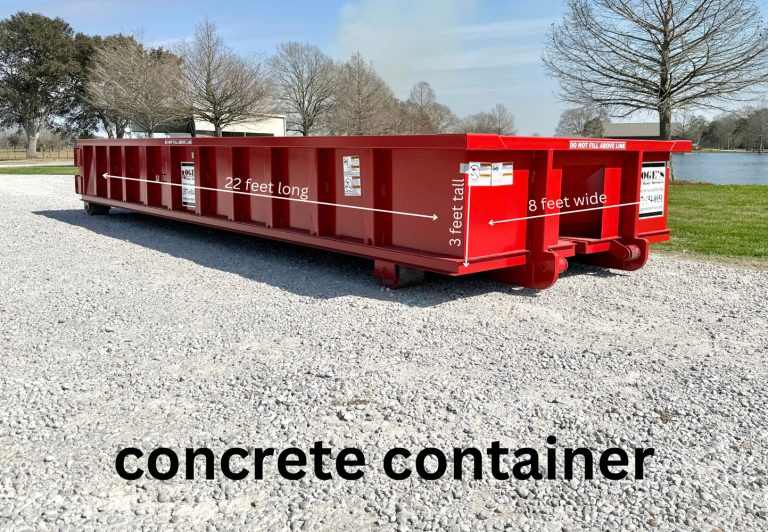
For projects that also involve disposing of solid concrete debris, keep in mind that broken concrete, brick, and masonry need to go in a dedicated concrete dumpster — not a standard roll-off container and not in the washout basin. OGE’S Waste Services can set up both a washout basin and a concrete dumpster on the same job site, giving you a complete concrete waste management solution.
What to Look for in a Concrete Washout Provider
Not all washout services are equal. When evaluating providers for your Acadiana construction project, consider these factors:
Compliance documentation — Your provider should supply EPA compliance records and disposal documentation that you can include in your SWPPP files. If they can’t produce this paperwork, that’s a red flag.
Responsive scheduling — Construction schedules change constantly. Your washout provider needs to accommodate same-day delivery requests, schedule changes, and rapid haul-outs when basins reach capacity ahead of schedule. Local providers who understand Acadiana’s construction pace have a clear advantage here.
Transparent pricing — Look for all-inclusive pricing that covers delivery, maintenance, and disposal with no hidden fees. Surprise charges for haul-outs, fuel surcharges, or disposal fees can turn an affordable service into a budget problem.
Local knowledge — A provider based in the Acadiana region understands local soil conditions, drainage patterns, and regulatory priorities. They know which disposal facilities are permitted, how LDEQ inspections typically work in this area, and what local project managers expect.
Schedule Your Concrete Washout Service in Acadiana
Concrete washout management doesn’t need to be complicated or expensive. With the right provider, it becomes a simple line item in your project plan that protects you from fines, keeps your site clean, and demonstrates professionalism to inspectors, clients, and general contractors.
OGE’S Waste Services delivers concrete washout basins throughout the Acadiana region — from Lafayette and Youngsville to Abbeville, Eunice, and every community in between. Same-day delivery is available, pricing is transparent at $150 per basin with no hidden fees, and every rental includes full EPA compliance documentation.
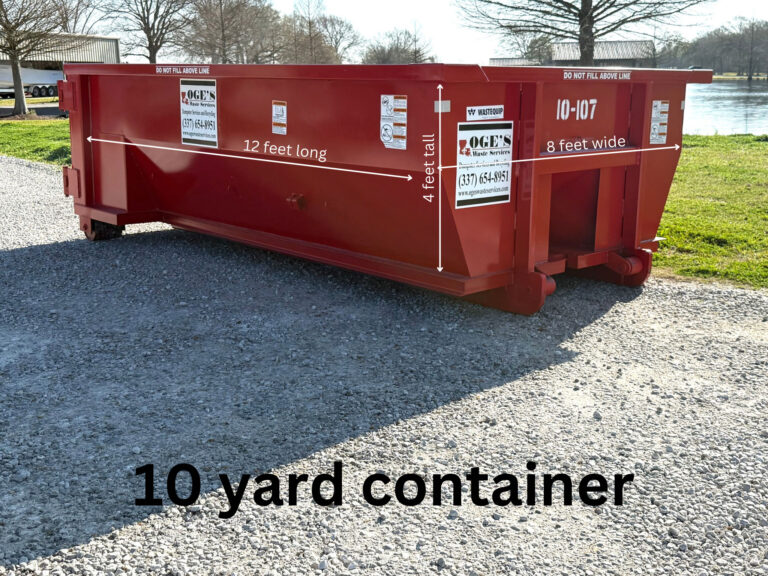
Need a dumpster rental for the same project? We offer 10-yard, 15-yard, 20-yard, and 30-yard roll-off dumpsters plus a specialized concrete dumpster for heavy materials — so you can manage all your job site waste through one local provider.
Book your concrete washout basin online for fast scheduling, or call 337-654-8951 to discuss your project. Our locally-owned team has been helping contractors across Acadiana manage waste efficiently and stay compliant since 2016.